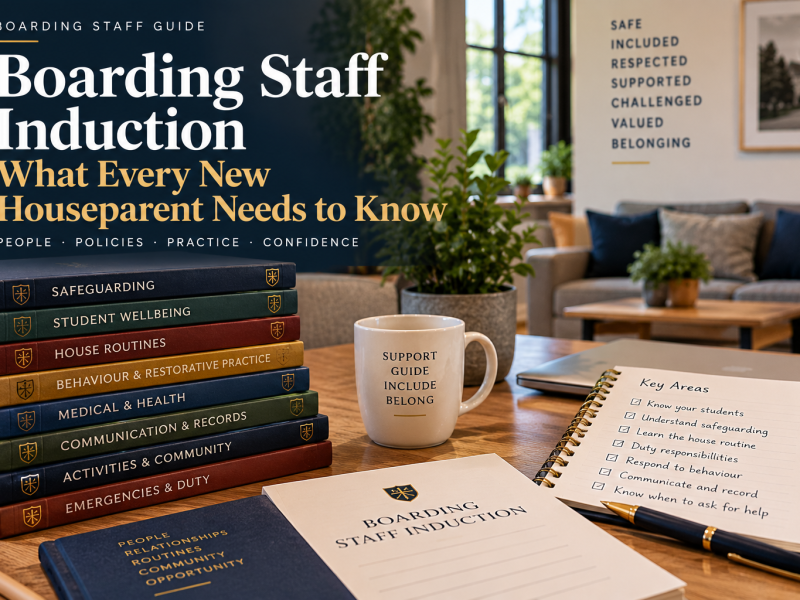
Helping New Boarding Students Settle In: The First 72 Hours
Starting boarding school is a major transition. A new student may be adjusting to a new school, bedroom, roommate, routine, community and, in many international boarding schools, a completely new country.
For boarding tutors and houseparents, those first few days provide an important opportunity.
The goal isn’t to make a new boarder completely independent within 72 hours. It is to help them feel safe, known and that they belong.
Here are some practical ways boarding staff can make those first 72 hours count.
- Make the Welcome Personal
A student’s first impression of their boarding house matters.
Whenever possible, know something about the student before they arrive: their preferred name, interests, previous boarding experience, languages, sports or hobbies.
Instead of simply saying:
“Welcome. Your room is upstairs.”
Try creating an immediate connection:
“Welcome, Daniel. I heard you’re a keen tennis player. We have several students in the house who play.”
It is a small difference, but good pastoral care is often built around small moments.
A student should feel that they have been expected, not simply processed.
- Don’t Explain Everything on Day One
New boarding students are often overwhelmed with information.
Meal times. Study periods. Laundry. Bedtimes. Activities. Electronics. Sign-outs. House rules. Medical procedures.
Trying to explain everything immediately rarely works.
During the first few hours, concentrate on what the student actually needs to know:
Where is my room?
Where is the bathroom?
When is the next meal?
Where do I need to be next?
Who can I ask for help?
What happens tonight?
The rest can be introduced gradually.
Good boarding school induction is a process, not a presentation.
- Help Them Make One Connection
One good connection can transform a student’s first evening.
Look for natural links between new and existing boarders. They might enjoy the same sport, support the same football team, speak the same language or share an interest in music, fitness, gaming or art.
You don’t need to manufacture friendships.
Simply create opportunities for them to happen.
“David, could you show Alex where the gym is?”
That simple introduction may achieve more than another 30 minutes of formal induction.
- Pay Attention After Parents Leave
The period immediately after a family leaves can be difficult.
A student who appeared excited all afternoon may suddenly become quiet once the bedroom door closes.
Try not to leave a new boarder alone with nothing to do.
Invite them downstairs. Introduce them to another student. Have a snack. Walk around the house. Start a game of table tennis.
The objective isn’t to distract students from their emotions.
It is to show them that life in their new community has already begun.
- Expect Homesickness
Homesickness at boarding school is normal.
Missing home doesn’t mean a student is failing to settle. A student can miss their family and still enjoy boarding life.
Avoid immediately responding with:
“Don’t worry. You’ll be fine.”
Instead, acknowledge what they are experiencing.
“It’s understandable that you’re missing home. You’ve had a huge couple of days.”
Then move toward something practical.
“Would you like to come downstairs for a while?”
“Who have you enjoyed spending time with?”
“Is there anything that would make tonight easier?”
Sometimes students don’t need us to solve the feeling.
They need us to recognise it.
- Watch the Quiet Students
The students demanding the most attention aren’t always those who need it most.
Look around the edges of the boarding house.
Who is eating alone?
Who disappears into their room?
Who hasn’t joined an activity?
Who hasn’t spoken much?
Who is constantly calling home?
Who doesn’t appear to have connected with anyone?
Observation is one of the most valuable pastoral skills a boarding tutor or houseparent can develop.
Sometimes the student saying the least is communicating the most.
- Make the First Night Predictable
The first night in a boarding house can feel strange.
Students should know:
when bedtime is
where staff will be
how to contact someone during the night
what happens if they feel unwell
when they need to wake up
what happens the following morning
One sentence can be surprisingly reassuring:
“If you need anything during the night, someone is here.”
Predictability creates security.
- Help Roommates Start Well
Roommate relationships can become one of the best parts of boarding school.
They can also become an immediate source of tension.
Early conversations should cover basic expectations around:
noise
sleep
alarms
cleanliness
shared spaces
visitors
borrowing belongings
privacy
Don’t wait for a disagreement before discussing these things.
Five minutes of proactive conversation can prevent weeks of frustration.
- Check In Without Making It an Interview
Repeatedly asking a student “Are you okay?” usually produces the same answer:
“I’m fine.”
Try different questions.
What’s been the best part so far?
What’s been the hardest part?
Who have you met?
Is anything still confusing?
What are you looking forward to?
These questions encourage conversation rather than simply requiring a yes-or-no answer.
- Give Them Something to Contribute
Belonging grows when students become participants rather than visitors.
Give new boarders small opportunities to contribute.
Ask them to help prepare an activity. Let them assist with something in the common room. Ask them to show another new student somewhere they discovered yesterday.
It sends an important message:
You aren’t visiting this community. You are part of it.
What Should Success Look Like After 72 Hours?
A student doesn’t need to be completely settled after three days.
A successful first 72 hours might simply mean that they:
know several boarding staff by name
know who to approach when they need help
understand the basic boarding house routine
have spoken with several students
know their way around
have participated in something
understand the evening and bedtime routine
have had a meaningful pastoral check-in
Most importantly, someone in the boarding house should know them.
Students Remember How Boarding Made Them Feel
Students probably won’t remember every rule explained during their boarding school induction.
They may remember something much smaller.
The houseparent who noticed they were sitting alone.
The boarding tutor who remembered their favourite sport.
The older student who invited them to join a game.
The member of staff who knocked on their door after their parents left.
Excellent pastoral care in boarding schools is rarely about grand gestures.
It is created through hundreds of small interactions that communicate three things:
You are safe here.
You matter here.
You belong here.
A Practical Resource for Boarding Staff
If you’re a boarding tutor, houseparent, Head of House or residential educator looking for more practical guidance, The Houseparent’s Handbook from Lumina Learning House provides a comprehensive professional reference for everyday boarding life.
The 300-page guide explores student wellbeing, homesickness and transition, safeguarding, behaviour, routines, relationships, communication, difficult conversations, emergencies and building a positive boarding culture.
It is designed for both experienced boarding professionals and staff beginning their first residential role.
Explore The Houseparent’s Handbook and the complete Boarding & Pastoral Resources collection from Lumina Learning House on Teachers Pay Teachers.
Boarding Tutor Guide provides practical advice, ideas and professional resources for boarding tutors, houseparents, residential staff, Heads of House and boarding leaders who want to build safe, supportive and thriving boarding communities.