Boarding Staff Induction: What Every New Houseparent Needs to Know
Starting work in a boarding school can be overwhelming.
A new houseparent or boarding tutor may suddenly be responsible for routines, student wellbeing, safeguarding, behaviour, medication procedures, communication, activities and emergencies — often while learning dozens of student names.
A strong boarding staff induction should therefore do more than explain rules.
It should prepare staff for the reality of residential education.
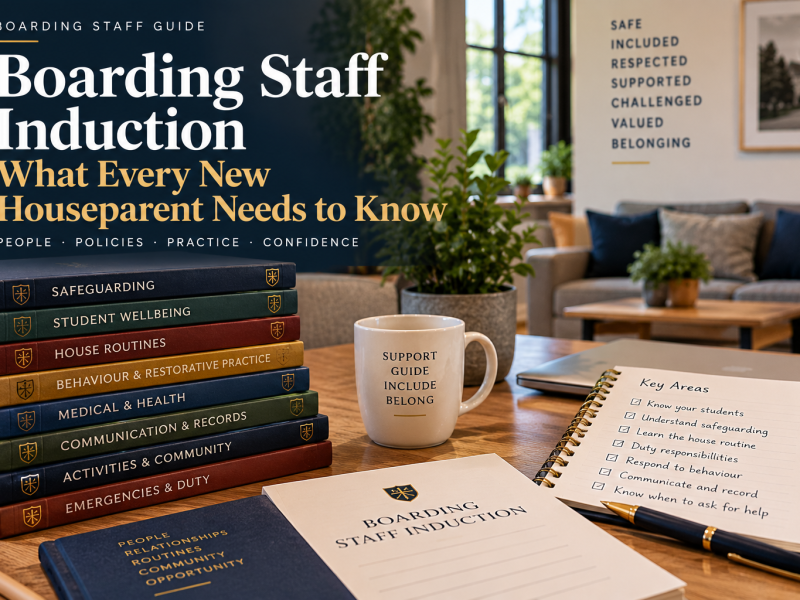
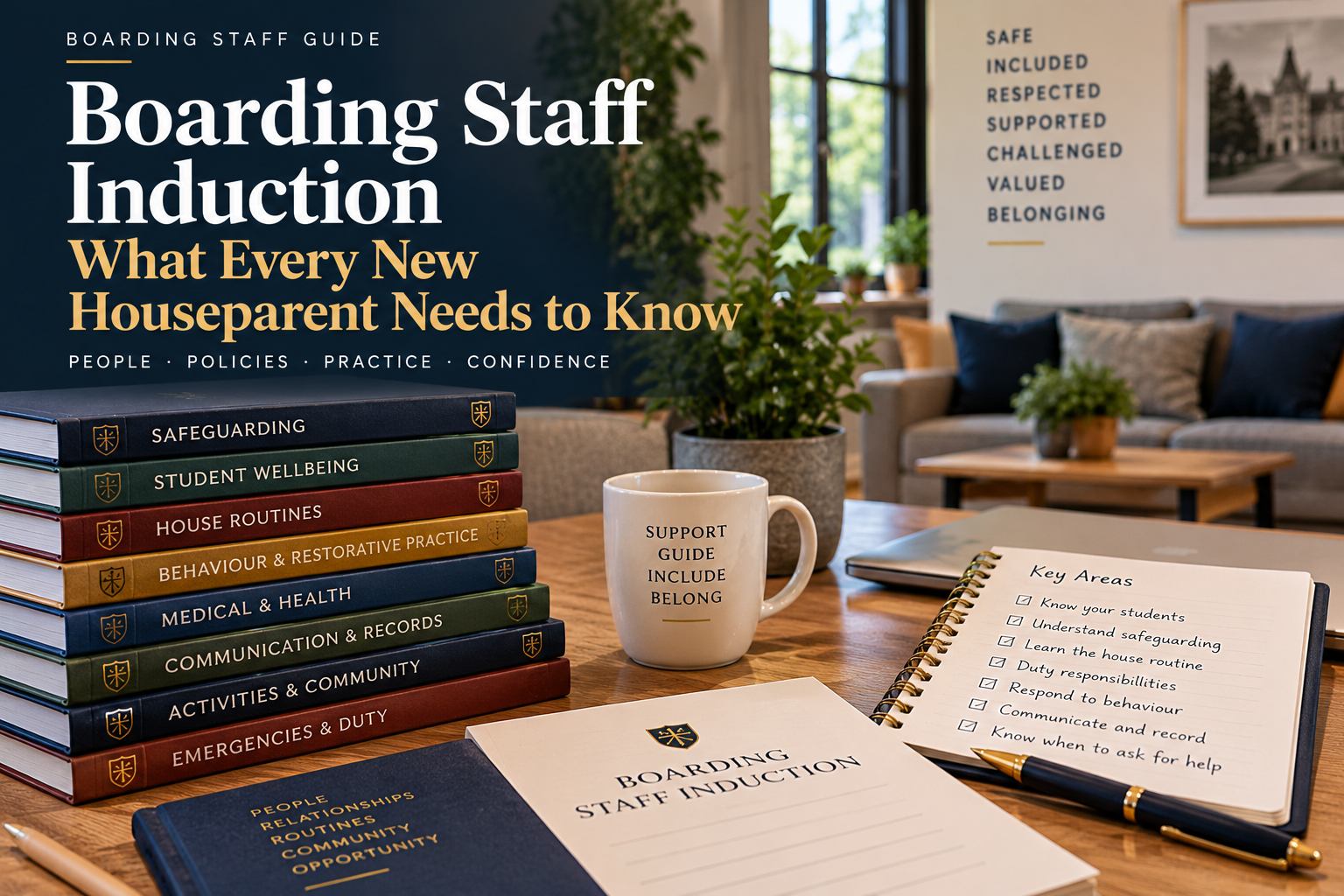
Here are seven areas every new boarding professional should understand.
1. Know Your Students
Good boarding begins with relationships.
New staff should quickly learn students’ names, routines, interests and individual needs.
But knowing students also means noticing changes.
Who normally comes downstairs but suddenly stays in their room?
Who usually eats well but has stopped?
Who seems unusually quiet?
Relationships allow boarding staff to recognise when something isn’t right.
2. Understand Safeguarding
Every boarding staff member must understand the school’s safeguarding procedures.
They should know:
- who the safeguarding leads are
- how to report a concern
- what must be recorded
- appropriate professional boundaries
- what to do following a disclosure
- when information must be escalated
Staff shouldn’t be expected to “work it out” during an incident.
Safeguarding procedures must be clear before duty begins.
3. Learn the House Routine
Boarding houses run on routine.
New staff should understand:
- wake-up procedures
- meals
- registration
- study periods
- activities
- sign-outs
- evening routines
- bedtimes
- night duty
- weekend expectations
Consistency between staff matters.
Students quickly notice when different adults enforce completely different expectations.
4. Understand Duty Responsibilities
Being “on duty” involves much more than simply being present.
Staff need to know:
Where should I be?
What should I be checking?
What needs recording?
Who do I contact if something happens?
What information must be handed over?
Clear duty expectations protect students and staff alike.
5. Know How to Respond to Behaviour
Boarding behaviour management is different from classroom management.
You continue living alongside the student after the incident.
That makes relationships particularly important.
New staff should understand school sanctions, but they should also learn how to:
- de-escalate situations
- listen before reacting
- remain calm
- separate behaviour from the student
- use restorative conversations
- follow up after incidents
The aim isn’t simply compliance.
It is helping young people learn from mistakes.
6. Communicate and Record
Boarding relies heavily on good communication.
Important information may need to move between:
- boarding staff
- teachers
- medical teams
- safeguarding staff
- senior leaders
- parents and guardians
New staff should know what needs recording, where it should be recorded and who needs to know.
A small piece of information at 7:00 p.m. may become extremely important at midnight.
7. Know When to Ask for Help
Perhaps the most important message during boarding staff induction is:
You aren’t expected to know everything.
New staff should know exactly who to contact when they are uncertain.
Strong boarding teams communicate.
They ask questions.
They hand information over.
They support one another.
Trying to manage everything alone isn’t a sign of competence.
Knowing when to seek support is.
Induction Should Build Confidence
A good boarding staff induction shouldn’t leave new staff with a folder containing 100 policies and the instruction to read them.
Policies matter.
But staff also need practical preparation.
Use scenarios.
Discuss real boarding situations.
Ask:
What would you do if a student didn’t return?
What if a student disclosed something concerning?
What if two roommates were fighting?
What if a student became ill during the night?
What if a parent called angry about a decision?
These conversations turn policy into practice.
Because when something happens at 11:30 p.m., staff need more than information.
They need confidence.
Training New Boarding Staff?
The Boarding Staff Induction Programme from Lumina Learning House provides a structured professional training resource designed specifically for boarding and residential education.
With 88 professional training slides and 8+ hours of training content, it can support induction for houseparents, boarding tutors, residential staff and boarding teams.
Use it for pre-term induction, staff development, refresher training or structured professional conversations throughout the year.
Explore the Boarding Staff Induction Programme and Boarding & Pastoral Resources from Lumina Learning House on Teachers Pay Teachers.